
Against Amnesia: Music in Identity, History, and Resistance Across Generations
Chloe V. Dinh
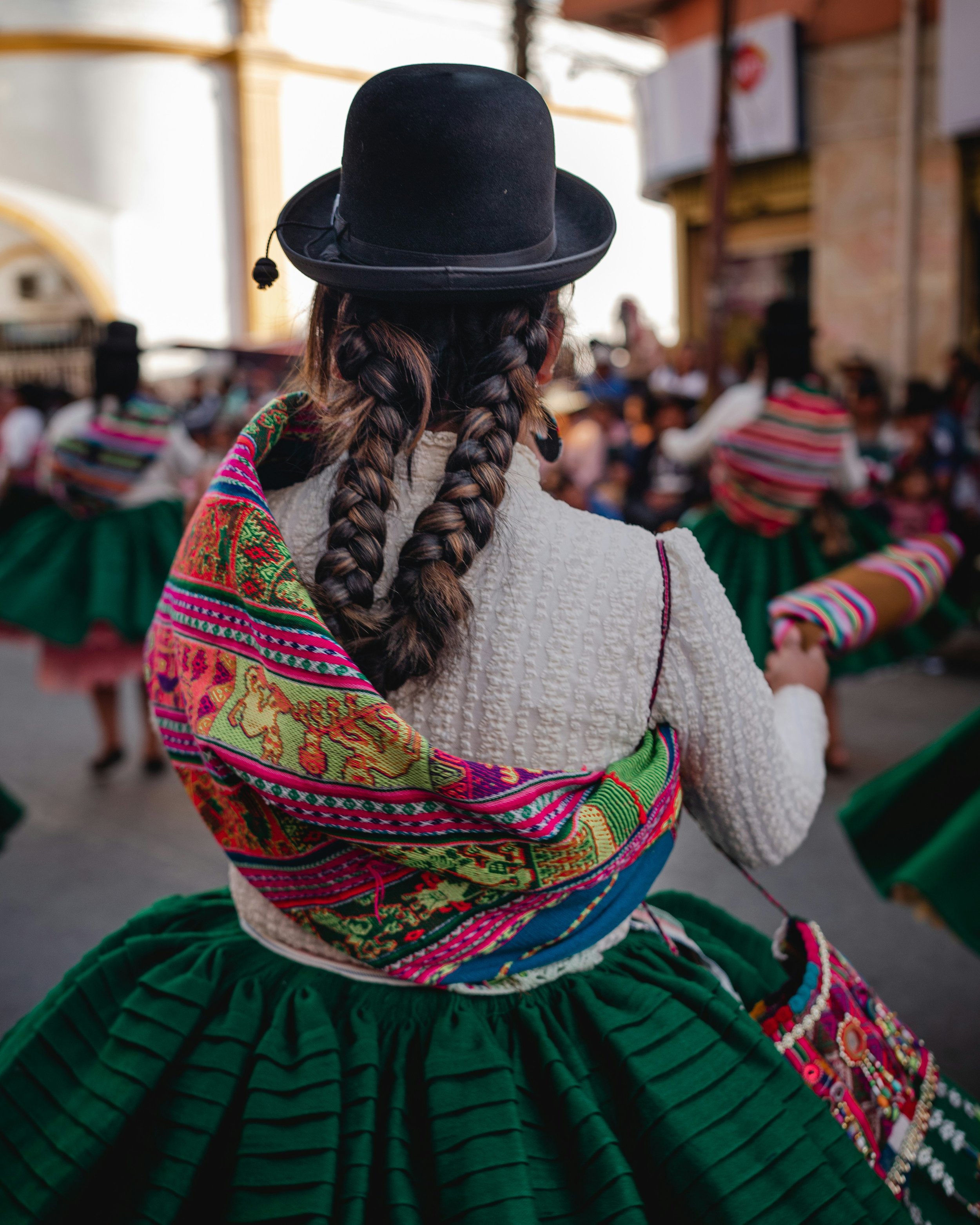
Cultural historian Paul Connerton (1989) argues in How Societies Remember that commemorative ceremonies and performative acts are often the primary means by which collective identity is carried forward when dominant narratives prove inadequate (Connerton 4). To restore their frail identities to health, oral cultures turn to songs as repositories of histories, values, and political expression. In turn, these songs prove denser than government archives, shriller than parliamentary bills, and nimbler than schools in propagating what matters to communities (Shelemay 2006).
This explains why musical communities engage in what scholars term “heritagization”—treating musical genres and listening practices as vessels of cultural memory and group identity (Brandellero et al. 220). Yet because the meaning of music is never fixed, and because its meaning is shaped as much by those who listen as by those who create, music is subject to shifting expectations and vulnerable to appropriation or dilution. Each generation heaps new meanings onto old songs even as they pay them close appraisals, hearing different meanings in familiar melodies. For example, a teenager listening to her grandmother’s ratty vinyl records listens through ears shaped by different struggles than her own. Throughout this journey, songs remain vulnerable—to appropriation by dominant cultures, to commercial forces that flatten against market demands, to dilution that make inroads into their meaning. Yet somehow, songs continue to shelter memories too voluminous for history books and nurture belonging for those at society’s edges.
Artistic Intent and Reception
What metamorphosis occurs when an artist pours her soul into music only for her listeners to hear something radically different? Tejano music, as embodied by the music of Selena Quintanilla-Pérez, elides easy categories. Born from Texas Mexican experiences of economic marginalization and political disenfranchisement, Tejano music represents a hodgepodge of musical traditions straddling Mexican rancheras, Latin American cumbias, German polkas, American country, and hip-hop elements. (Paredez 41).
Audiences, however, rarely recognize this complexity. Some critics begrudgingly acknowledge Tejano while dismissing it as too Americanized. Others bemoan what they make out to be excessive Mexican traditionalism. Countless listeners automatically file it under “working-class” or “marginalized” music, putting a halt to deeper engagement (Paredez 41). These reductive frameworks impose artificial boundaries onto a musical tradition defined precisely by its refusal to satisfy conventional cultural identifiers.
Reception patterns across generations reveal persistent gaps between creator intent and subsequent cultural interpretation. Although scholars conceptualize music as a carrier of “diasporic consciousness,” expected to transmit cultural memory between generations (Roberson 2010), it often fails to live up to its anticipated role. Rolf Lidskog’s research on the role of music in shaping ethnic identity within diasporic communities offers evidence rejecting the view of music as an inert object,instead exposing its susceptibility to shifts. Lidskog documents the way younger generations actively “negotiate” rather than simply inherit identity through music, resulting in changed senses of self. Consequently, music struggles to provide environments where second- and third-generation immigrants might fully develop a “diasporic consciousness” connected to ancestral homelands and traditional musical forms (Lidskog 2017).
Research conducted in Turkey reached similar conclusions. Even seemingly minor preferences—such as younger generations choosing Westernized Turkish pop over traditional forms—significantly altered their conception of Turkish identity and the cultural memories they associate with it (Guran 2014). In contrast to assumptions about stable intergenerational transmission, Guran predicts a future in which Turkish youth understand their homeland predominantly through mediated representations rather than inherited memories that never seem to be far from reach in previous generations.
These cases show the extent of reinterpretation and reimagination through contemporary experiential lenses often overlooked by older generations and musical artists working to preserve homeland connections through traditional music. Music therefore defies its expected role as a static transmitter of culture, preferring to be a protean vehicle wherein identity and memory undergo continuous negotiation across generational boundaries, taking on new shades of meaning.
Preservation and Protest
Music can go beyond shaping self-understanding at individual levels, enabling self-preservation and resistance for communities as a whole. The Maori preserve and transmit their cultural history through waita–songs that carry the voices and wisdom of ancestors across generations (Binney 203). These musical forms transcend simple memory storage, connecting individuals to their whakapapa (genealogy) and fortifying the mana of their whānau (family). During Te Kooti's resistance movement and throughout Ringatū faith development, waiata and other oral narratives mounted a collective struggle against colonial narratives, preserving counter-historical accounts and projecting ambitions for future autonomy (Binney 205, 209).
Evidence also highlights music’s role in language revitalization (Echeverria and Sparling 2024). For instance, indigenous Mexican hip hop videos allow Indigenous youth to connect with Indigenous languages through rapped lyrics that articulate Indigenous perspectives on contemporary issues—beyond the limitations of formal, institutional education. As summarized by Echeverria and Sparling, researchers Yamane and Phillips argue that music and related activities have the potential to effectively counter problematic U.S. policies that “frame Indigenous languages in terms of deficits” and “position non-Native politicians as ‘governmental saviors.’”
Indigenous musical artists actively contest harmful misrepresentations by reclaiming uniquely indigenous concepts of time and space, thereby asserting control over self-representation and quieting attempts at mischaracterization. For example, Melawa Devi challenged politico-cultural hegemony in India through songs that took oppressive structures to task (Shrestha 2024). Her music amplified voices from "gender subaltern (marginalized women and disempowered communities)" populations systematically silenced in Indian society. One song, titled “Na Gharlai Ghar Kahinchha,” contains these translated lyrics: "Home cannot be a home; female is the palace... Only pious home's entrance is the female... Ruling goddess shining diamond is the female." Through these bold lyrics, Devi reimagined women as sacred and foundational to both domestic and spiritual life so as to initiate what researchers Tara Lal Shrestha and Bidhya Shrestha call “a direct intervention against the feudal structures attached with patriarchy.”
Taken together, these cases reveal how music—whether grounded in Indigenous oral tradition, politically charged performance, or subaltern expression—operates as a living archive through which communities assert identity and cultural continuity. This function extends beyond the margins: contrary to common assumptions, popular music has often been put to work as heritage (Bennett 2009). In fact, for post-1945 generations, music genres like rock and punk may be powerful markers of national or local identity and heritage that carry as much cultural weight as more traditionally recognized symbols of heritage.
Authenticity and Commercialization
Commercial associations do not always preclude music from sustaining cultural identity, although they undeniably introduce risks of historical and cultural dilution. K-pop's reception pattern supports this. Despite its origins in Korea’s postcolonial and postwar transformation, K-pop now circulates globally both as commercial product and identity negotiation site for diasporic Korean youth and other marginalized audiences (Koh and Baek 2020). Critics frequently lambast K-pop’s production system for its dependence on striking visuals, marketable personalities, and formulaic musical structures over substantive cultural expression (Yoon 2022). However, for populations grappling with displacement, hybridity, or generational distance from heritage backgrounds, it serves as something more meaningful than passing entertainment. For many second- and third-generation listeners especially, K-pop engagement enlivens emotional and symbolic connections to ancestral homelands that would otherwise go unclaimed. (Yoon 2022).
Despite its role in maintaining cultural connections, K-pop’s commercialization and global reach have raised understandable concerns about the erosion of authenticity and the diminishing possibility of critical resistance. As Jin (2016) and G. Kim (2018) observe, K-pop’s highly commodified character seldom provides room for what Bhabha (1994) terms “the third space”—a hypothetical space in which cultural negotiation and resistance flourishes. Nevertheless, numerous diasporic listeners repurpose K-pop as surrogate archive through its distinctive aesthetics, vernacular, and participatory fandom practices. This in turn facilitates reconnection with Korean history and identity that otherwise buckle under assimilationist pressures (Yoon 2022). This dual nature significantly complicates celebratory narratives surrounding cultural hybridity.
García Canclini (2000) cautions that hybridity discourses frequently diminish historical nuance and obscure systemic inequalities, especially when cultural forms detach from their sociopolitical roots. Professor John Lie echoes this critique, characterizing K-pop—and the broader Korean Wave phenomenon—as “naked commercialism,” shaped less by authentic cultural tradition than by South Korean governmental export-driven economic agenda (Lie 2012). In contrast to this dismissive assessment, researchers Wonho Jang and Youngsun Kim (2013) argue that K-pop’s uniqueness is impossible without enduring Korean sociocultural dynamics—specifically, time/space hybridity, the "Red Queen's race," and deeply ingrained cosmopolitan aspirations. These elements distinguish K-pop from Western pop music and allow it to embody distinctly Korean sensibilities that still preserve historical memory and foster identity formation, particularly among youth confronting questions of belonging both within Korea and throughout its global diaspora.
The question of hybridity is a kind of “glass half empty” / “glass half full” question in that invites both cheers and criticism. However, given the connective potential of music, in which artists craft confident zingers in the face of dominant cultural expectations through its kneading and mixing of disparate traditions, such hybridity remains productive. Unlike classical Western traditions, these innovations frequently emerge from the real-world tensions between preservation and alienation. This steers musicians toward groundbreaking expressions. Examining each innovation for authenticity markers falsifies the nature of musical evolution, which has always involved cultural borrowing, reinterpretation, and creative fusion.
Conclusion
Fulfilling such key sociocultural functions, music refuses neat categories. It functions as "a catalyst for social cohesion and identity formation" and a "cultural lodestar, guiding societies through the currents of time and change" (Liu, Chen, and Huang 2024). Ensuring music’s continued fulfillment of these dynamic roles requires substantive input from diverse stakeholders, including musical artists, educators, and governmental institutions who must avoid reducing musical traditions to shells of themselves.
Researcher Nguyen Dinh Lam proposes creating professional artist-led collectives responsible for safeguarding folk music heritages. Under his proposal, these artists would pursue this mission while "avoiding the risk of hybridization and the dilution of each group's distinct identity." They would receive governmental support and strategic promotion through media channels to reach local communities, cultural managers, and academic researchers (Nguyen 2023).
Beyond funding local and diasporic music initiatives, governments could provide incentives for integrating community-based musical practices into educational curricula. This approach acknowledges the symbiotic relationship between music education and "the processes of cultural preservation, perpetuation and development" (Lee 2021). Research from the University of Tasmania even concluded that "music education is performing a role akin to UNESCO's Convention for the Safeguarding of Intangible Cultural Heritage."
By recognizing music’s place in the transmission of folk culture across generations, educational institutions can become active agents in this endeavor. For diasporic and indigenous communities especially, designing music curricula with local and ancestral traditions can counterbalance globalizing forces that homogenize pop culture with mass-produced sounds. The potential disconnection between younger generations and traditional forms might be alleviated if these initiatives evolve alongside contemporary musical tastes and technologies—particularly important since music remains highly responsive to changing reception modes that commandeer the attention of younger generations.
Music lives in performance, repetition, and reinterpretation. This organic quality proves ripe for addressing the challenges of cultural preservation in globalizing contexts. The question goes beyond whether music preserves identity—it does, it will, it must. It is about whose music is preserved, taught, funded, and celebrated. Will we privilege corporate sounds, or create space for dangerous, beautiful music that carries memories too inconvenient for official histories? Our answer will determine whether future generations inherit sonic landscapes rich with historical overtones or corporate “products” displayed like culture, insidiously supplying simplified narratives in place of complicated cultural truths.
References
Bennett, Andy. 2009. "'Heritage Rock': Rock Music, Representation and Heritage Discourse." Poetics 37 (5–6): 474–489.
Bhabha, Homi K. 1994. The Location of Culture. London: Routledge.
Binney, Judith. 1995. Redemption Songs: A Life of Te Kooti Arikirangi Te Turuki. Auckland: Auckland University Press and Bridget Williams Books.
Brandellero, Amanda, Susanne Janssen, Sara Cohen, and Les Roberts. 2014. "Popular Music Heritage, Cultural Memory and Cultural Identity." International Journal of Heritage Studies 20 (3): 219–223. https://doi.org/10.1080/13527258.2013.821624.
Connerton, Paul. 1989. How Societies Remember. Cambridge: Cambridge University Press.
Echeverria, Begoña, and Heather Sparling. 2024. "Heritage Language Revitalisation and Music." Journal of Multilingual and Multicultural Development 45 (1): 1–8. https://doi.org/10.1080/01434632.2022.2157006.
García Canclini, Néstor. 2000. "The State of War and the State of Hybridization." In Without Guarantees: In Honour of Stuart Hall, edited by Paul Gilroy, Lawrence Grossberg, and Angela McRobbie, 38–52. London: Verso.
Güran, Pınar. 2014. "Music and Cultural Memory: A Case Study with the Diaspora from Turkey in Berlin." PhD diss., University of Exeter.
Jang, Wonho, and Youngsun Kim. 2013. "Envisaging the Sociocultural Dynamics of K-pop: Time/Space Hybridity, Red Queen's Race, and Cosmopolitan Striving." Korea Journal 53 (4): 83–106.
Jin, Dal Yong. 2016. New Korean Wave: Transnational Cultural Power in the Age of Social Media. Urbana: University of Illinois Press.
Kim, Gooyong. 2018. From Factory Girls to K-Pop Idol Girls: Cultural Politics of Developmentalism, Patriarchy, and Neoliberalism in South Korea's Popular Music Industry. Lanham, MD: Lexington Books.
Koh, Ho Youn, and Kyungmin Baek. 2020. "The Korean Diasporic Identity in the Context of K-Pop Consumption: The Case of Young Female Diaspora Members in Kazakhstan." Journal of Asian Sociology 49 (1): 1–28.
Lee, Daniel. 2021. "The Role of Music Education in Cultural Preservation, Perpetuation and Development in 21st Century Digital Environments." Paper presented at the 43rd ANZARME Conference: Unmasking Music Education (online), University of Melbourne with Southern Cross University, October 30.
Lidskog, Rolf. 2017. "The Role of Music in Ethnic Identity Formation in Diaspora: A Research Review." International Social Science Journal 66 (219–220): 23–38. https://doi.org/10.1111/issj.12091.
Lie, John. 2012. "What Is the K in K-pop? South Korean Popular Music, the Culture Industry, and National Identity." Korea Observer 43 (3): 339–363.
Liu, Jiayi, Yan Chen, and Shu Huang. 2024. "Exploring the Sociocultural Influence of Music Traditions Across Different Cultures." SHS Web of Conferences 187: 02008. https://doi.org/10.1051/shsconf/202418702008.
Nguyen, Dinh Lam. 2023. "Preserving Folk Music in Community Cultural Events as a Method of Preserving Traditional Heritage: A Case Study of the Ta Oi Ethnic Group in Thua Thien-Hue Province, Vietnam." Malaysian Journal of Music 12 (1): 34–47. https://doi.org/10.37134/mjm.vol12.1.3.2023.
Paredez, Deborah. 2009. Selenidad: Selena, Latinos, and the Performance of Memory. Durham, NC: Duke University Press.
Roberson, James E. 2010. "Singing Diaspora: Okinawan Songs of Home, Departure and Return." Identities: Global Studies in Culture and Power 17 (4): 430–453.
Shelemay, Kay Kaufman. 2006. Soundscapes: Exploring Music in a Changing World. 2nd ed. New York: W. W. Norton.
Shrestha, Tara Lal, and Bidhya Shrestha. 2024. "Music as Resistance: Revisiting Melawa Devi and Her Songs." SCHOLARS: Journal of Arts & Humanities 6 (2): 1–13.
Yoon, Kyong. 2022. Diasporic Hallyu: The Korean Wave in Korean Canadian Youth Culture. Cham: Palgrave Macmillan.
